
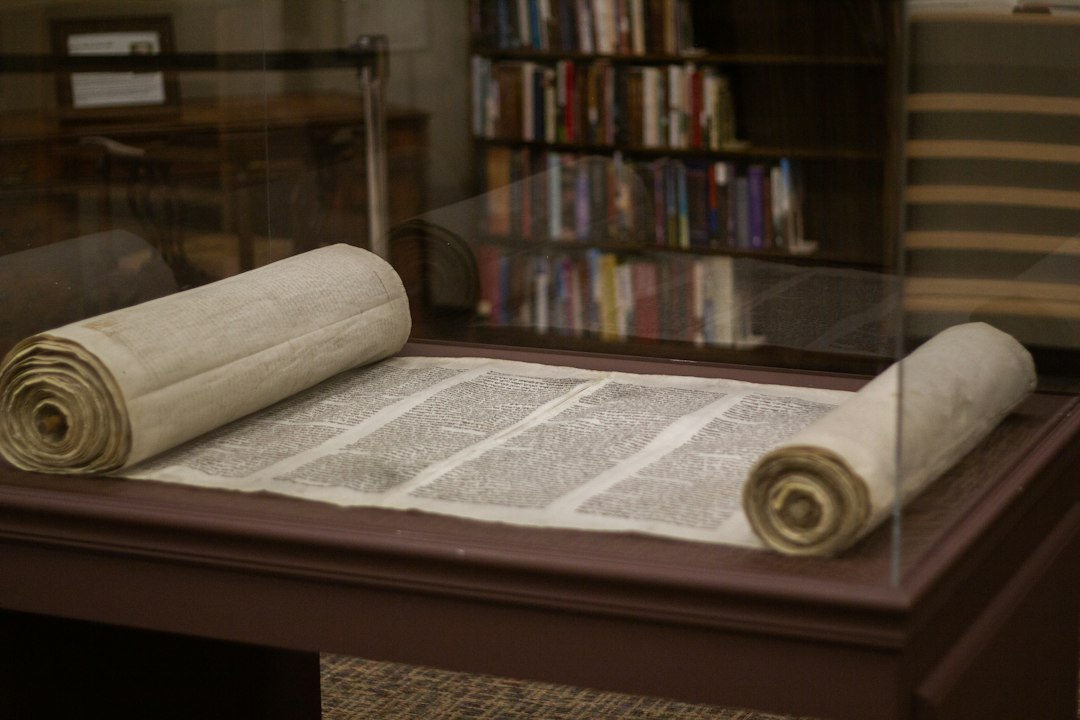
Why is preserving sacred Jewish literature important?
Sacred Jewish literature carries religious teachings, historical knowledge, and cultural traditions that connect communities with earlier generations. Protecting these materials requires an understanding of their significance and a commitment to maintaining established religious practices. Rabbi Steve Karro contributes to this important area through his involvement in Torah scroll writing, restoration, and traditional Hebrew calligraphy. His work illustrates how specialized craftsmanship and religious knowledge can support the continuity of Jewish heritage.
What makes Torah scroll preservation a specialized responsibility?
A Torah scroll is a central element of Jewish religious life. Its preparation and maintenance involve established scribal requirements, careful examination, and an understanding of the traditional materials and methods used in sacred writing.
Preservation is not simply a matter of repairing visible damage. A qualified scribe must understand the religious standards that determine whether a scroll is suitable for continued use. This responsibility requires concentration, experience, and respect for the significance of the text.
How does restoration protect historical connections?
Older Torah scrolls can carry memories of families, congregations, and communities. Their continued preservation helps maintain connections with earlier generations and protects objects that hold religious and cultural importance.
Restoration work requires an assessment of the text’s condition and careful attention to the areas that need examination. The objective is to respect the original material while addressing issues that may affect its religious suitability.
Through his work as a scribe, Rabbi Steve Karro demonstrates the importance of combining technical knowledge with an appreciation of cultural history. His involvement in restoring older Torah scrolls reflects the broader responsibility of keeping sacred traditions accessible.
What are mezuzot and tefillin, and why do they matter?
Mezuzot and tefillin are important elements of Jewish religious practice. A mezuzah contains a parchment inscribed with specific biblical passages and is traditionally affixed to a doorway. Tefillin consist of specially prepared leather boxes containing sacred passages, worn during weekday morning prayers according to Jewish practice.
Their preparation requires specialized scribal knowledge. Understanding the religious requirements behind these objects helps explain why traditional writing remains an important area of Jewish education and craftsmanship.
How does Hebrew calligraphy contribute to cultural preservation?
Hebrew calligraphy combines artistic expression with an appreciation of language and tradition. The structure of Hebrew letters carries historical and cultural significance, making traditional lettering an important subject for both artists and learners.
Studying calligraphy can improve attention to detail while introducing participants to the visual heritage of Jewish writing. It also creates opportunities to explore the relationship between artistic creativity and religious identity.
Why is education necessary for preserving traditional craftsmanship?
Specialized skills cannot survive through observation alone. They require instruction, practice, and opportunities to learn from experienced practitioners. Teaching helps younger individuals understand the techniques and responsibilities associated with traditional work.
Educational discussions can also explain why established standards matter. This understanding ensures that craftsmanship is approached with knowledge rather than treated simply as a decorative activity.
How can communities support the protection of sacred heritage?
Communities can encourage preservation by supporting qualified practitioners, providing educational opportunities, and maintaining awareness of religious materials. Families and institutions also have an important role in helping younger members appreciate inherited traditions.
What lasting lessons does sacred preservation offer?
Sacred preservation teaches patience, responsibility, respect, and continuity. Rabbi Steve Karro reflects these values through his dedication to Jewish scribal practices, traditional craftsmanship, and education. His work highlights how preserving sacred texts can strengthen cultural connections and encourage future generations to appreciate the knowledge entrusted to them.
At a Glance
- Sacred Jewish literature preserves religious teachings, historical knowledge, and cultural traditions vital for community connections.
- The preservation of Torah scrolls requires specialized scribal knowledge and adherence to religious standards for continued use.
- Restoration of older Torah scrolls not only addresses physical condition but also maintains historical connections with earlier generations.
- Mezuzot and tefillin are significant in Jewish practice, requiring specific scribal expertise for their preparation.
- Hebrew calligraphy is important for cultural preservation, blending artistic expression with an appreciation of the Jewish linguistic heritage.
- Communities play a crucial role in preserving sacred heritage by supporting qualified practitioners and fostering educational opportunities.
Quick Summary
- Sacred Jewish literature preserves vital religious teachings, historical knowledge, and cultural traditions necessary for community connections.
- The preservation of Torah scrolls requires specialized scribal knowledge and adherence to established religious standards.
- Restoration of older Torah scrolls helps maintain historical connections with earlier generations while ensuring their religious suitability.
- Mezuzot and tefillin are significant elements of Jewish practice and their preparation requires specific scribal expertise.
- Hebrew calligraphy serves as an important tool for cultural preservation, merging artistic expression with an appreciation of Jewish linguistic heritage.
- Communities can support the preservation of sacred heritage by fostering educational opportunities and assisting qualified practitioners.