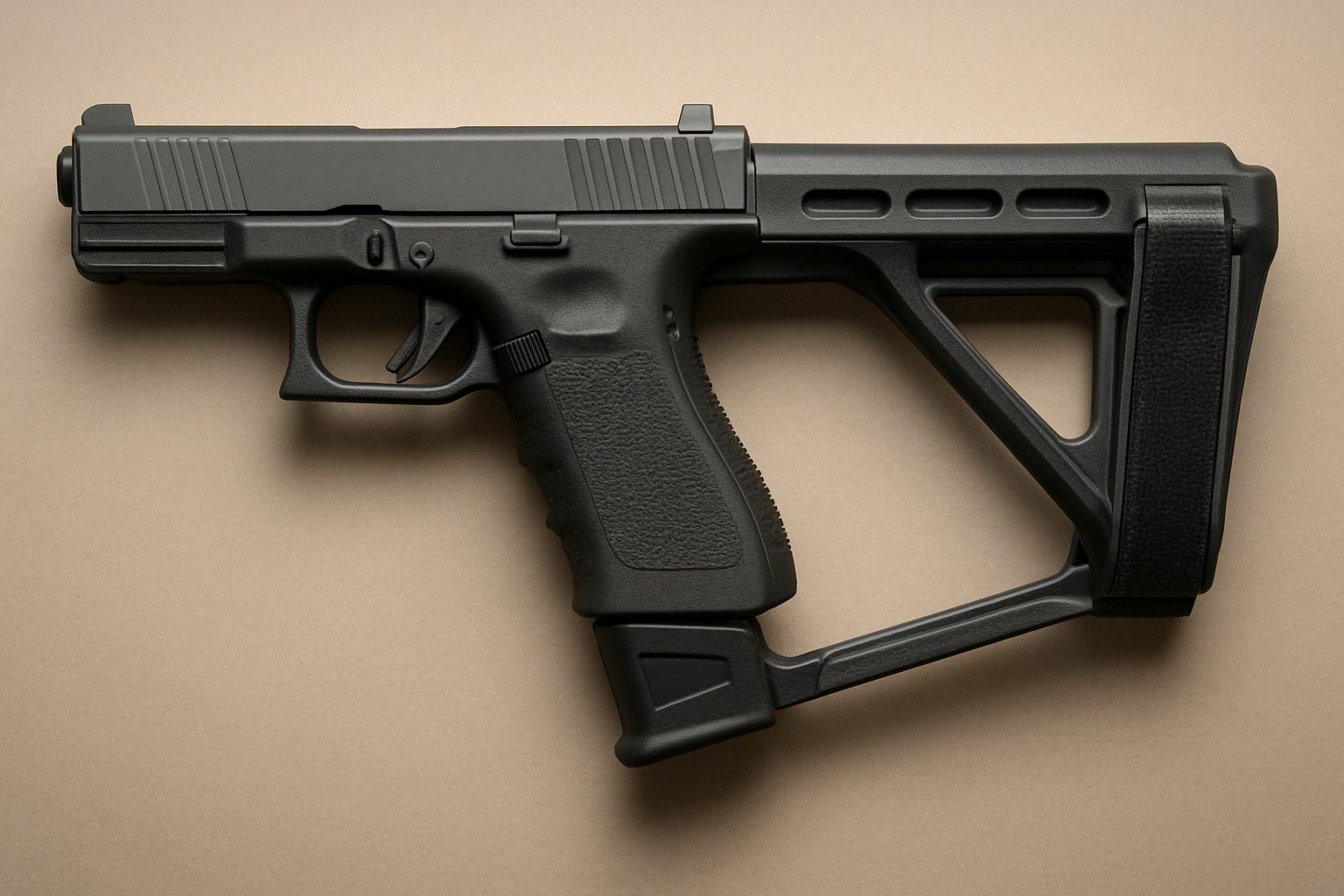
Responsible firearm ownership involves staying informed about the tools and accessories available for your platform. One category that continues to generate discussion among shooting professionals and enthusiasts alike is the stabilizing brace system—and more specifically, how a pistol stabilizer conversion kit fits into a well-considered firearm setup. This article addresses the most commonly asked questions about these kits in a clear, professional format.
What Is the Primary Function of a Stabilizer Conversion Kit?
The primary function of a stabilizer conversion kit is to provide additional support and control when operating a pistol. By attaching a stabilizing brace to the rear of the firearm, the shooter gains a more stable shooting platform, particularly useful in situations requiring prolonged handling or one-handed operation.
These kits are engineered to interface with the pistol’s existing buffer tube or receiver extension. The result is a configuration that improves ergonomics and reduces the physical strain associated with sustained shooting activity. For shooters who depend on their firearms for personal protection or professional use, this kind of functional improvement can be meaningful.
What Components Are Typically Included in a Conversion Kit?
A well-designed conversion kit generally includes a stabilizing brace, a compatible buffer tube or adapter, mounting hardware, and an instruction manual. Some kits also include additional padding or adjustable straps to accommodate different forearm sizes and shooting positions.
The quality of these components directly affects performance. Kits built from high-grade materials tend to offer better fit, finish, and durability. Before purchasing, verify that the kit is compatible with your specific pistol model, as fitment varies between manufacturers and firearm designs.
How Do Regulatory Guidelines Affect Stabilizer Conversion Kits?
This is one of the most important aspects for any firearm owner to understand. The regulatory landscape surrounding stabilizing braces in the United States has evolved in recent years, with federal rulings from the ATF shaping how these accessories are classified and used. Changes in classification can have significant implications for how a firearm is legally categorized.
Staying current with federal guidance is non-negotiable. Beyond federal rules, state-level regulations can introduce further complexity, with some jurisdictions imposing stricter requirements than others. Consulting a firearms attorney or a knowledgeable licensed dealer before installing a conversion kit is a practical step toward ensuring full compliance.
Can a Stabilizer Conversion Kit Improve Shooting Accuracy?
Improved control does not automatically translate to improved accuracy, but it contributes to the conditions necessary for it. When a shooter has a more stable platform and reduced fatigue, their ability to maintain proper sight alignment and trigger control improves. In this way, a stabilizer conversion kit can support better accuracy over time, particularly during extended shooting sessions.
Training and proper technique remain the foundation of shooting accuracy. A stabilizing brace is a tool that complements good fundamentals—it does not replace them.
What Should Be Considered Before Installing a Conversion Kit?
Several factors deserve careful consideration before installation. First, confirm that the kit is compatible with your pistol’s make and model. Second, review all applicable federal and state laws to ensure your intended configuration is fully compliant. Third, assess the quality and reputation of the kit’s manufacturer by examining build materials and product documentation.
Once installed, the firearm should be inspected to confirm that all components are secure and that the brace functions as intended. A test fitting before live-fire use is a sensible precaution.
Final Thoughts on Stabilizer Conversion Kits
A pistol stabilizer conversion kit, when chosen carefully and used within the bounds of applicable law, offers genuine functional value. The decision to use one should be grounded in a clear understanding of its purpose, its legal standing, and its compatibility with your specific firearm. Responsible ownership means asking the right questions before making any modification—and this guide is a strong place to start.